With a Whistle and a Witness: Watch Peter Brown’s Story Here
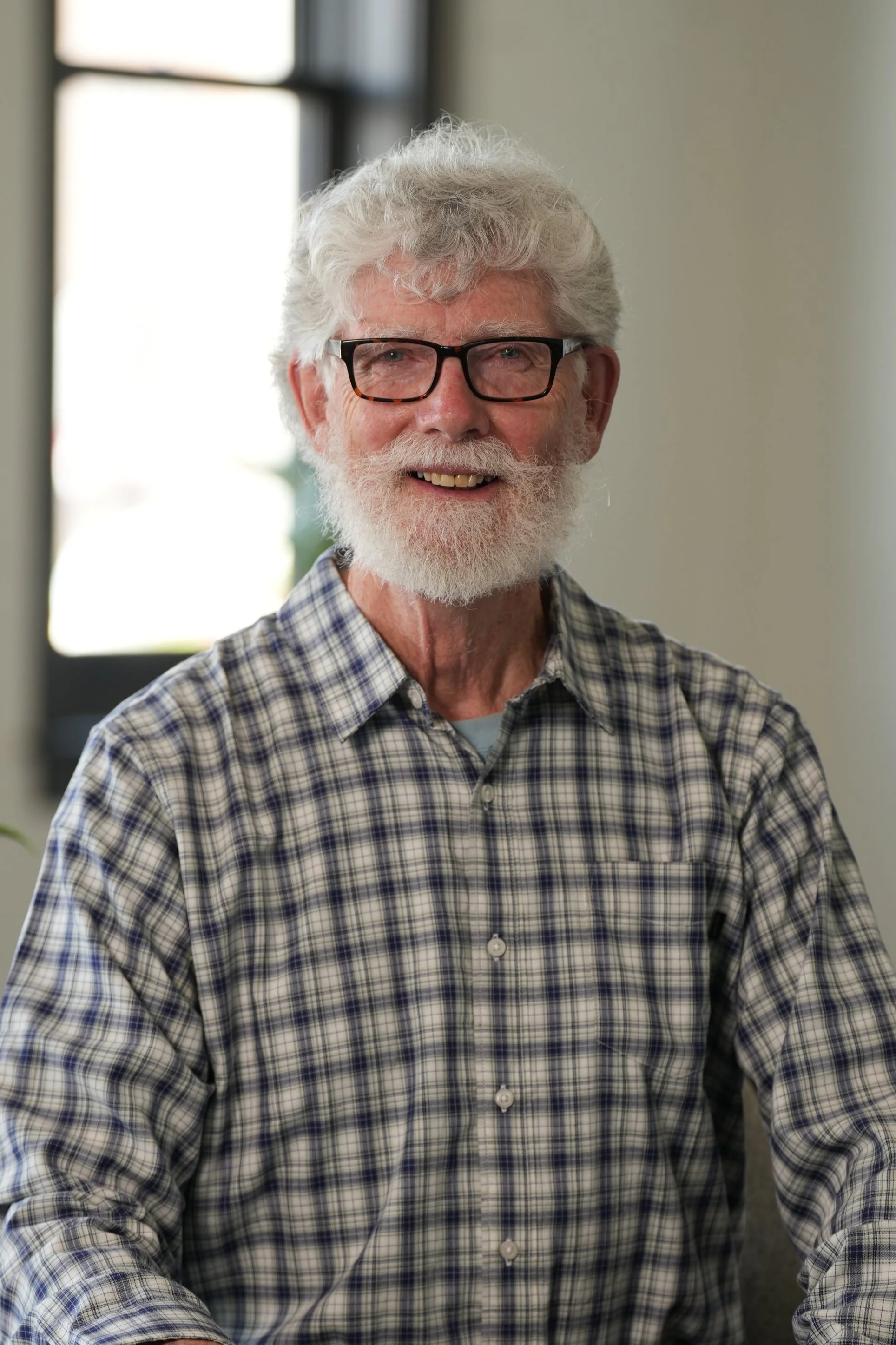
Peter Brown
Peter Brown remembers the moment the whistles started.
It was a Friday morning on a cold winter day near Lake Street and Pleasant, outside a mosque during prayer. The Council on American-Islamic Relations had reached out to the Immigrant Defense Network asking for constitutional observers to help protect mosques across the metro. Peter signed up.
He arrived with the tools of a trained observer: a whistle, a notebook, a phone, and the quiet discipline to watch, document, and bear witness.
Then six ICE vehicles stopped in front of the mosque.
Six or seven fully equipped officers got out. The tension rose fast. Peter went inside to alert security. Outside, the whistles began. They came first from constitutional observers, then seemingly from everywhere. Neighbors, observers, and people on the street responded together. The sound cut through the fear.
And then ICE got back into their vehicles and drove away.
Peter still laughs when he remembers the smallness of the tool in his hand.
“You have this little whistle,” he said. “Big deal. But sometimes it works.”
For Peter, that moment revealed something larger than one confrontation. It showed that nonviolent community defense was not abstract. It could work. It could interrupt harm. It could give people a way to act together when fear was trying to isolate them.
Peter has lived in South Minneapolis since 1978. He lives near 31st and Portland, close to Lake Street, in a neighborhood that has shaped his life and his understanding of responsibility. His children went through Minneapolis public schools. His family built roots here. His work as a managing attorney at legal aid was nearby. For decades, this community has not been an idea to him. It has been home.
The values that brought him into this work began even earlier.
Peter says his parents taught him to identify with the underdog and to help make the place where we live hospitable to all people. That lesson stayed with him through his legal career, through his Quaker faith community, and through the weeks when Operation Metro Surge brought fear into the streets of South Minneapolis.
Before the surge arrived here, Peter had been watching what was unfolding in other parts of the country. He saw federal power, militarization, and enforcement tactics escalating in places like Los Angeles and Portland. He did not know exactly what would happen in Minnesota, but he knew something was coming.
“We knew that something like this was going to happen,” he said. “We didn’t know exactly what form it was going to take.”
In Minneapolis, the form was not the federalization of the National Guard. It was street-level enforcement. ICE and Border Patrol activity began moving through the city. The fear was visible.
Peter had lived near Lake Street for more than 40 years. He knew its movement, sound, and rhythm. During the surge, he saw a sharp drop in pedestrian traffic and even car traffic. The neighborhood became quieter, more subdued, more wary.
Then the Immigrant Defense Network became one of his points of connection.
Through IDN alerts and organizing, Peter learned where community response was needed. He remembers Bro-Tex as one of the first major moments of public resistance. The day after enforcement activity there, IDN organized a press conference that brought together community members and elected officials in a united front.
For Peter, that gathering mattered because it gave the community a place to stand.
“It was as if the community had been given permission, or a place to demonstrate,” he said, “to shake off the wariness and transform that into a spirit of firm resolve.”
That resolve would define Peter’s role during the surge.
He had experience with the National Lawyers Guild’s legal observer model. He understood the importance of creating a visible check on law enforcement overreach. When IDN began training and coordinating constitutional observers, Peter knew this was a place where his background, skills, and location could be useful.
He lived just a block and a half from Lake Street.
That proximity carried responsibility.
“I knew that I couldn’t just let whatever was happening on Lake Street happen,” he said.
So Peter retooled his observing skills through IDN training. He joined the network of people responding to calls, watching, documenting, and showing up at key locations. He appreciated the idea of “adopt a block,” a model brought back from California and shaped into local response. He also recognized that much more organizing was happening around him than he had even realized.
That is part of what moved him: the discovery that he was not alone. He was one person in a much larger architecture of resistance.
There were dispatchers. There were rapid response chapters. There were people following ICE vehicles late at night. There were people answering community calls. There were people showing up when only 20, 30, or 50 people could arrive. There were organizations, neighbors, faith communities, and trained observers learning how to protect one another in real time.
Peter is careful with the word bravery. He does not rush to claim it for himself.
To him, bravery means doing the right thing while knowing there may be serious consequences. He says the people he most associates with bravery were the ones driving around late at night, following ICE vehicles, documenting where they were, and warning the community. That work carried risk. It made everyone else’s work more effective.
“What better definition of observing government in action,” he asked, “than following them as they go about their intended business?”
For Peter, observation was not passive. It was a democratic act. It was a way of telling the government: we see what you are doing, and we do not accept it.
The surge also taught him something about what communities must fight for beyond the immediate crisis. When ICE and Border Patrol tried to disrupt daily life, they revealed just how essential the basics are: safe housing, meaningful employment, education, health care, and the ability to move through one’s neighborhood without terror.
The response, then, could not only be about stopping one raid or documenting one incident. It had to be about defending the conditions that allow every neighbor to live with dignity.
“It put the experience of a felt community, of felt common purpose,” Peter said. “It gave us that gift of experience.”
He carries several moments with him.
The mosque, where whistles helped send ICE away.
The gathering after a neighbor was shot, where people stood together and asked what keeps us safe.
The night after Alex Prettie was killed, when neighbors gathered around small fires on corner after corner, holding silence, grief, gratitude, and resolve.
Again and again, what stayed with Peter was not only fear or loss. It was the way people recognized each other as neighbors. It was the spiritual weight of standing together. It was the determination that what was happening would not be allowed to become normal.
Peter believes those experiences are now part of the community’s muscle memory.
People learned who to call. They learned how to show up. They learned how to watch. They learned how to resist without abandoning their commitment to nonviolence. They learned that courage is not always loud. Sometimes it sounds like a whistle outside a mosque. Sometimes it looks like a neighbor standing on a corner. Sometimes it is a trained observer with a notebook, refusing to look away.
“My name is Peter Brown,” he said. “I live here in South Minneapolis, and among other things I worked as a trained constitutional observer during Operation Metro Surge.”