We Have Done the Impossible: Watch Mark Goldberg’s Story Here
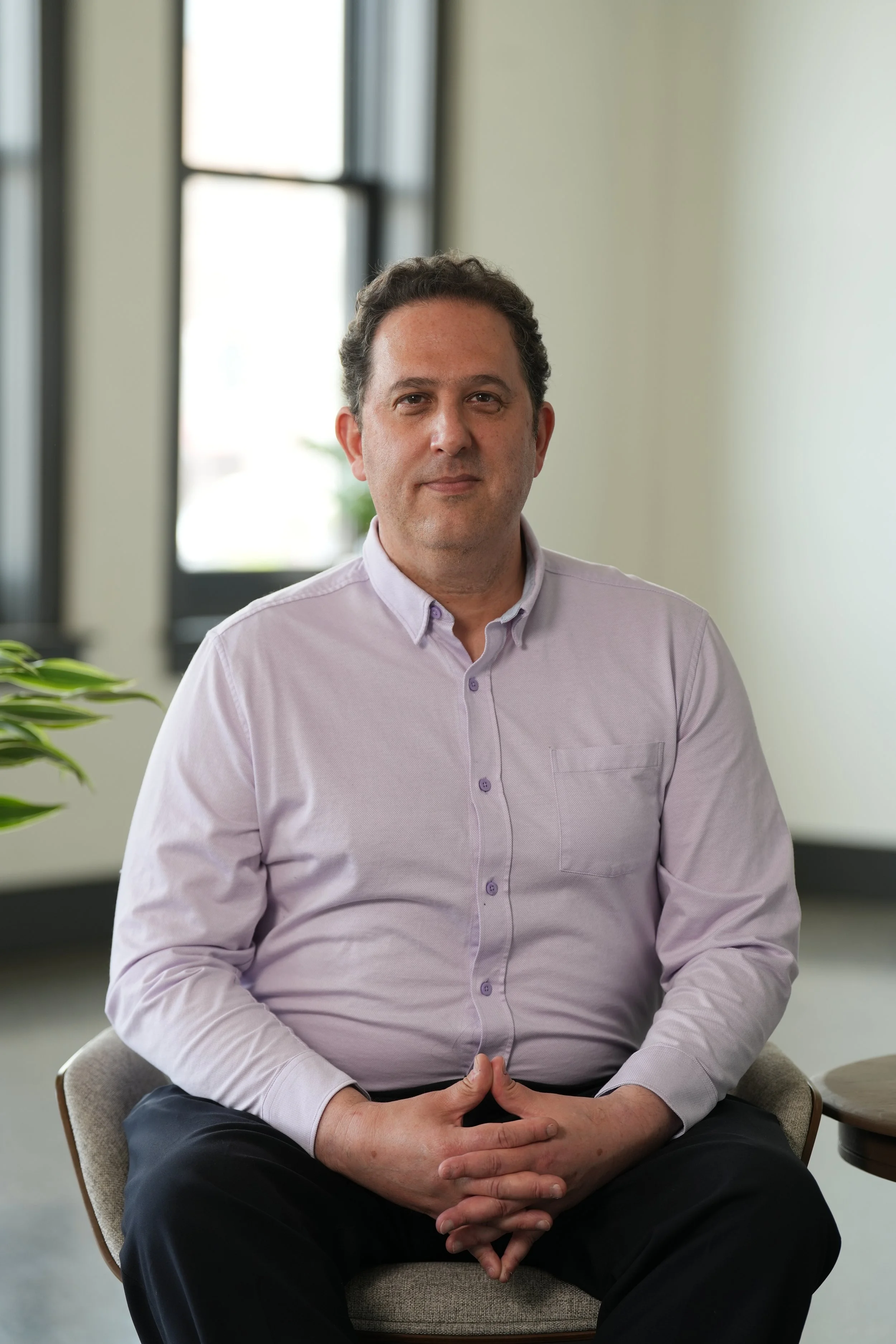
Mark Goldberg remembers the businesses that closed their doors because fear had entered before any customer could.
He remembers families who told him they no longer felt comfortable leaving home. He remembers returning weeks later and realizing some still had not left. He remembers children confined inside small spaces for months because federal enforcement had made daily life feel dangerous.
For Mark, Operation Metro Surge was not an abstract policy fight. It was something he saw street by street, business by business, family by family.
“It was hard,” he said, “seeing some businesses having to shut down because they’re being targeted by ICE.”
Mark is originally from Philadelphia and has lived in the Twin Cities for 30 years. He is Jewish, active in his synagogue, and a synagogue board member. He has also spent years involved in safety and security work in his community. That background shaped the way he understood the moment in front of him.
If people were being targeted, someone had to respond. If families were afraid to leave their homes, someone had to show up. If agents were moving through neighborhoods, someone had to document, follow, warn, and protect.
For Mark, that responsibility was rooted in a simple belief.
“If you see something wrong, take action,” he said.
Mark had been connected to the Immigrant Defense Network since early 2025. Before Operation Metro Surge officially began, he was already seeing enforcement activity escalate. He was at the Bro-Tex raid in November, where he documented what was happening for IDN. He responded to a raid at 609 Rose Avenue in St. Paul. He joined organizing and direct action work. He was part of a growing network of people preparing before the crisis became visible to everyone else.
When the surge intensified, Mark became part of rapid response.
He went to mobile home parks and businesses. He helped monitor restaurants that were being targeted. He remembers Habanero in St. Paul, a restaurant that had to shut down for weeks after ICE activity made it impossible for workers and customers to feel safe. He remembers La Michoacana, East Lake Street businesses, and places where community members organized near-constant monitoring because the threat kept returning.
The work was emotional. It was exhausting. It was urgent.
“You can’t look into this enough,” Mark said. “Whether it’s rage, whether it’s heartbreak. It’s pretty emotional to be part of that small space.”
But Mark did not act alone. That is what he wants people to understand.
Community defense was an ecosystem.
There were dispatchers taking calls and sending people where they were needed. There were responders driving to neighborhoods and businesses. There were people behind the scenes checking license plates and tracking suspicious vehicles. There were legal advocates advising families in real time. There were people monitoring ICE movement. There were neighbors calling one another, showing up for one another, and refusing to let fear isolate them.
“It was pretty incredible,” Mark said.
One call took him and his wife to the George Street apartments in St. Paul. Community members believed bounty hunters were present and did not know what to do. Mark’s wife, a lawyer, got on the phone to help explain legal options while they drove toward the scene. Other neighbors were already arriving. Some interacted directly with the bounty hunters. Mark and others drove through the neighborhood afterward to make sure the threat had passed.
Another moment stayed with him around the arrest of Scott Talley.
Mark remembers seeing multiple vehicles identified as ICE in the area. He remembers people driving around, trying to understand what was happening, trying to protect the neighborhood, trying to stay close enough to witness. Then he saw Scott being taken from the house.
Mark was furious.
He says it is hard to explain what it does to a person to witness moments like that. It stays with you. It changes you.
“It’s hard, man,” he said.
As a Jewish person, Mark saw painful echoes of his own people’s history. That history did not allow him the comfort of distance. It demanded action.
“As a Jew, I see this, and I see parallels to my young people’s history,” he said. “And when we say never again, we have to make it.”
The work took a toll. After Metro Surge was said to have ended, Mark cried the next day. He did not know how to feel. Was it really over? Were they lying? What had happened to everyone taken? Who would come back? Who would not? Had the response worked? Had it been enough?
“I still don’t know how to complete the process on this,” he said.
That honesty is part of Mark’s story. Resistance is not clean. It does not always arrive with certainty. Sometimes it looks like driving at night, following suspicious vehicles. Sometimes it looks like checking on restaurants again and again. Sometimes it looks like crying after the immediate crisis passes because the body is finally allowed to feel what the work demanded.
But Mark also carries hope.
One of his favorite lines comes from the show Firefly: “We have done the impossible, and that makes us mighty.”
That sentence became a way for him to understand what the community accomplished.
“We beat them,” he said. “They are not gone. They’re still not gone. But we have pushed back.”
For Mark, hope comes from the fact that when the pressure was at its highest, community members did not disappear. They came together at small scales and large scales. They crossed neighborhoods. They protected people they knew and people they had never met. They said no.
Bravery, to Mark, is not only one kind of act. It is a family deciding to stay together through fear. It is a store opening even when workers know they could be taken. It is a woman driving alone to follow ICE vehicles while knowing the risks. It is neighbors refusing to let one another stand alone.
The future Mark is fighting for is rooted in justice.
“I want to see justice,” he said. “I want to see justice for all the people who have been mistreated and who have suffered under this.”
He does not pretend to have every answer. He does not know exactly what repair should look like for every family, worker, business, and neighborhood harmed. But he knows people must be made whole. He knows the Twin Cities must recover not by forgetting what happened, but by remembering who showed up.
Because Mark believes the world saw something here.
Minneapolis and St. Paul became known not only for the harm communities endured, but for the resistance communities built. People across neighborhoods refused to accept terror as normal. They organized, documented, protected, and answered the call.
“Hi. My name is Mark Goldberg,” he said. “I’m a resident of St. Paul. And during Operation Surge, I helped protect my neighbors across the Twin Cities.”