A Horrible Time to Love Children: Watch Mara Solis’ Story Here
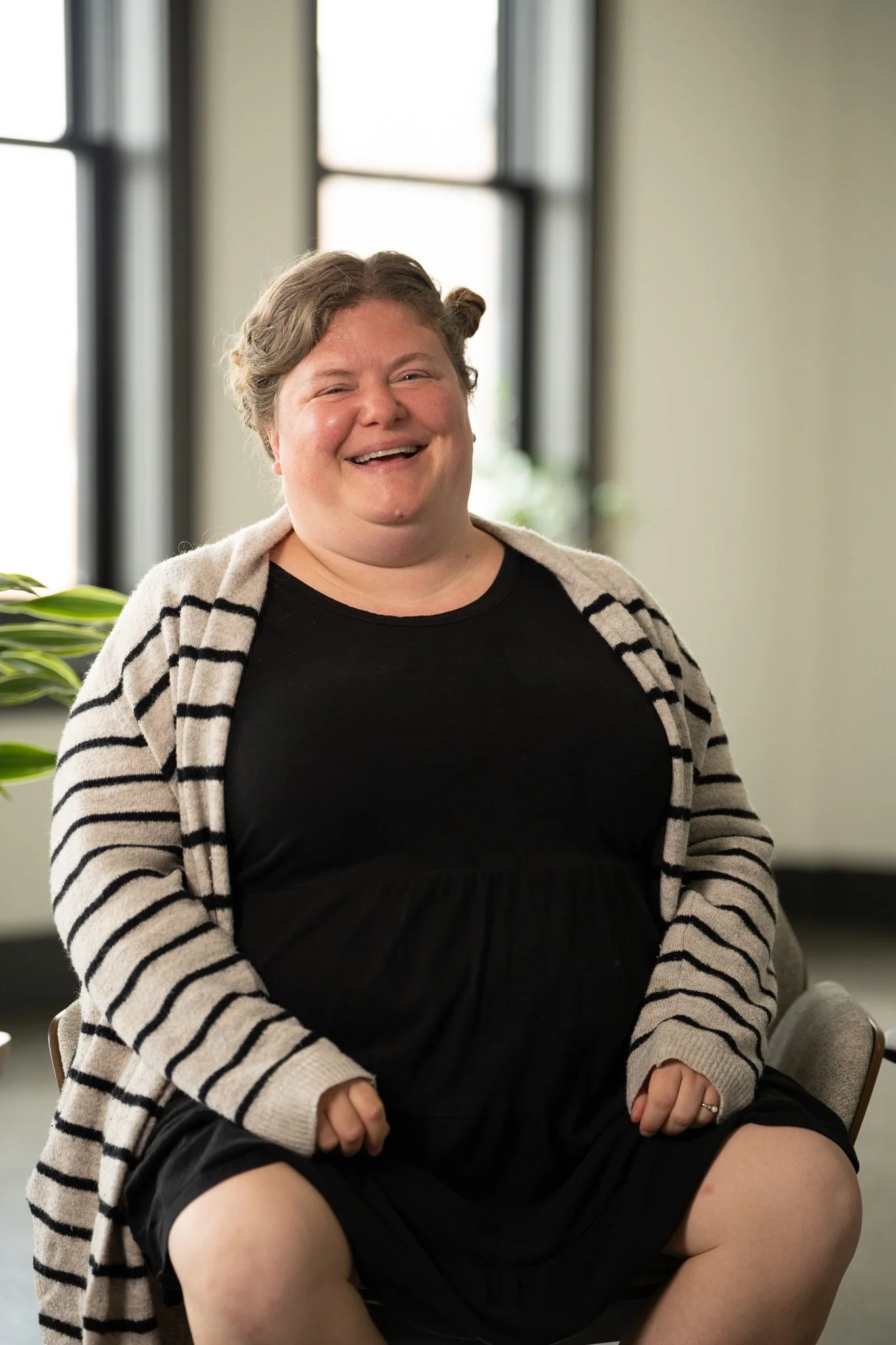
Hear Mara’s Story
Watch Mara’s Story
Read Mara’s Story
Mara Solis remembers the mother crying on the phone.
It was December, just before winter break. Mara was teaching fourth grade at Wellstone Elementary in St. Paul Public Schools when one of her student’s parents called in fear. Her child lived about a mile from school. Under normal circumstances, the school bus or parent pickup would have been routine.
But nothing felt routine anymore.
“Please don’t put him back on the bus,” the mother told her.
Mara asked if she wanted the child sent to parent pickup instead.
“No,” the mother said. “I can’t come to parent pickup either. La Migra is parked right outside my door.”
So Mara offered a ride. As she drove the student home, she saw them herself: a large Ford truck with tinted windows parked near the family’s home.
That was what Operation Metro Surge did. It turned the most ordinary parts of a child’s day — the bus stop, the school entrance, the ride home, the walk to class — into moments of fear.
For Mara, that fear was not abstract. It entered her classroom through the voices of children. Students came to school with stories about family members being harassed, uncles and cousins taken from work sites, parents too afraid to leave home, families trying to decide whether it was safer to stay, hide, or leave altogether.
“Everyday activity became a challenge,” she said.
Mara is a fourth grade teacher in St. Paul Public Schools. When asked who her community is, she did not hesitate.
Her school is her community. Her students are her community. Their families are her community.
Education, she said, is a unique place because teachers do not only build lessons. They build relationships. They build trust. They build small communities inside classrooms that extend into hallways, homes, neighborhoods, and families. So when something happens to students’ communities, teachers do not stand outside of it.
Teachers react.
Before Operation Metro Surge, fear was already present. Mara traces it back to the election of Donald Trump, and even earlier, to his first administration. Her husband is an immigrant, and she remembers the first time Trump was elected, wanting to hide under the bed and hope no one would find her family.
The rhetoric had always been frightening. But now the rhetoric had become action.
“It’s just the rhetoric, and now the actions behind that rhetoric are pervasive and intense,” she said. “And they just make everyday normal things scary.”
In that fear, Mara saw bravery everywhere. But she is clear about who carried the deepest courage.
“I think the real bravery is that of the families that we work with,” she said.
The families who stayed. The families who waited. The families who kept sending their children to school when they could. The families who made the painful decision to leave because they believed it was safest. The families who tried to hold their children’s lives together while the threat of detention or deportation hung over every routine.
Mara also saw bravery in educators.
At her school, the day began before students arrived. School started at 7:15. By 6:50, adults in neon yellow vests with big hearts on them were positioned around the building, watching cars, taking notes, and making sure students and families could enter safely.
Educators coordinated grocery runs. They helped families who were afraid to leave their homes. They worked with others to raise rent support so families facing eviction could stay housed. They helped organize DOPA clinics so parents could designate a trusted person to care for their children in case of detention or deportation. They searched for legal representation. They accompanied families through court cases and crises.
This was not extra work. For Mara, it was part of what being a teacher means.
“I loved my students, and I loved their families, and I loved my community,” she said. “I will not stand by and watch them terrorize and separate them further.”
As the crisis deepened, educators in St. Paul Public Schools knew they needed structure. Through the St. Paul Federation of Educators, they created a regional pod system to communicate across school sites, share information, protect families, and coordinate response. There were site leaders, regional leaders, parent-side structures, and three educators helping coordinate information across the district.
They needed a name for those three district-level coordinators. But they did not want militaristic language. They did not want to call themselves generals.
So they became the unicorns.
The name was playful, but the choice was serious. It reflected the kind of protection they were building: democratic, collaborative, community-oriented, and rooted in care rather than command.
“We were different,” Mara said. “We were democratic and collaborative and community oriented and not generals.”
That is the heart of Mara’s story. At a time when state violence made families feel hunted, educators built a system of protection that looked like love in motion. It looked like groceries, rent, court support, school patrols, phone trees, legal clinics, and adults in bright vests standing outside buildings before sunrise.
The work changed Mara’s relationship to the city.
She says she now knows more about St. Paul, and about the community where she teaches and lives, than she did before. She feels closer to her neighbors, colleagues, and community members in a way she compares to the aftermath of a natural disaster or government-related disaster.
She remembers one small vigil on a freezing corner after a death in the community. People came out with candles. Some were angry. Some were grieving. Some simply cared enough to stand in the cold. Many did not know each other before that night.
But they became neighbors in a deeper way.
“They were neighbors who cared,” Mara said. “They were neighbors who were pissed off, and they were neighbors who were sad.”
What stays with Mara most are not only the dramatic moments. It is the everyday ones. The small connections between educator and organizer. The way teachers were able to reach families because those families trusted them with their children. The way the classroom became a doorway into community defense.
She says Operation Metro Surge did not change her core beliefs. She already believed in community. She already believed in collaboration. She already believed in anti-fascist movements, protecting students, and keeping people safe.
But the crisis heightened everything.
It pushed those values into action.
What gives Mara hope now is the community response. The way people in the Twin Cities came together. The way crowds showed up in freezing weather. The way people kept showing up weekend after weekend. The way some are still standing near schools and studios to make sure children are safe.
The future Mara is fighting for is simple and profound: equitable education, safe buildings, a flourishing democracy, fair funding, and communities where children can live normal lives.
Not lives shaped by surveillance.
Not childhoods interrupted by fear.
Not students forced to wonder whether a vehicle near their school is there to take someone they love.
“I want my students to have a normal life,” Mara said. “It’s not humane. It’s not normal.”
During Operation Metro Surge, Mara showed up as a teacher, organizer, protector, and one of the “unicorns” helping coordinate a community defense system across St. Paul Public Schools.
Because when fear came for her students, she did what educators do.
She protected the classroom.
She protected the families.
She protected the future.